


Find License Plate Owner
ReverseLookup
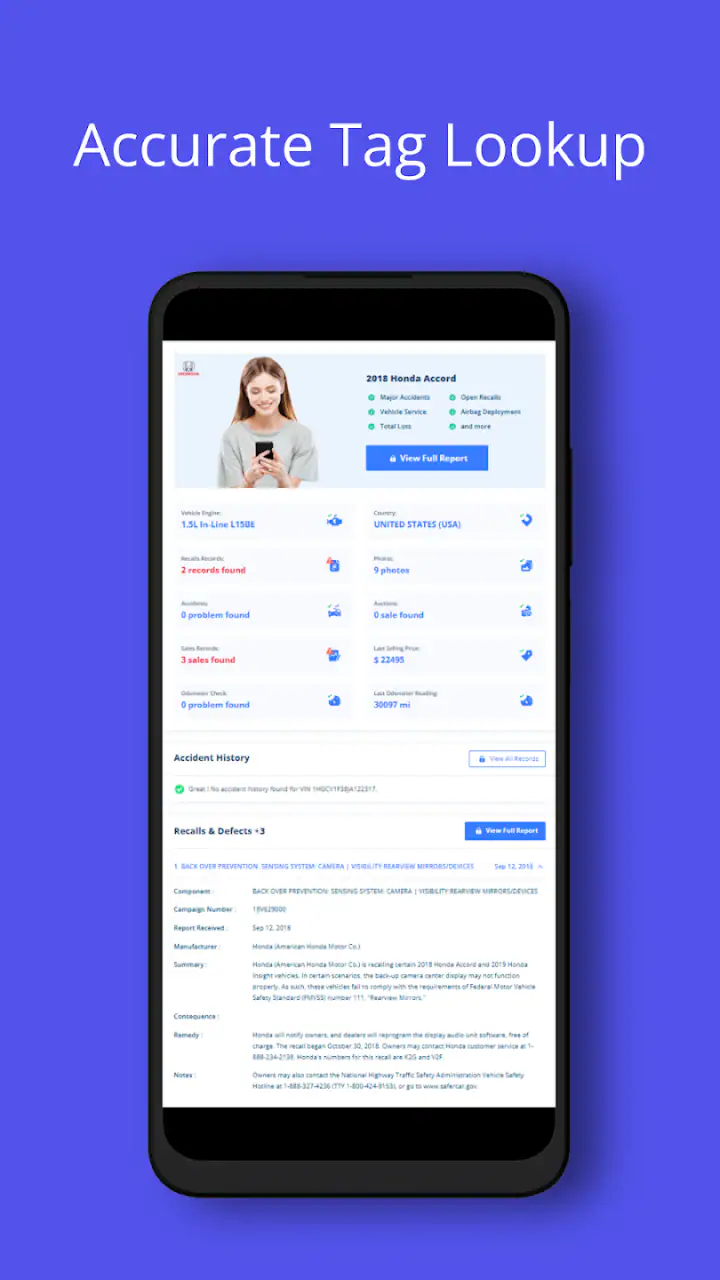
I approached Find License Plate Owner as a practical vehicle-information tool rather than something I would open for entertainment. Its purpose is straightforward: it supports license plate and VIN lookups through a private service while also pointing users toward official sources. That combination makes it more interesting than a simple search box, because it can serve as a starting point when I need to organize information about a vehicle and decide where to verify it next.
The app sits in the Auto & Vehicles category and is developed by ReverseLookup. It is free to use, carries an Everyone age rating, and runs on Android devices using version 6.0 or later. The version I reviewed is 1.0.5. Those details make it accessible to a broad range of Android users, especially people with an older phone who want a focused utility instead of a large automotive platform.
From quick curiosity to a repeatable vehicle-checking routine
Why the first week feels useful
The initial appeal comes from how little preparation the task seems to require. If I have a license plate or VIN in front of me, I can use the app as a dedicated place to begin looking into it instead of opening a general web search and sorting through unrelated pages. That focus is valuable when I am checking a vehicle listing, trying to understand an unfamiliar car in a parking situation, or helping someone decide what information deserves closer attention.
The private lookup service gives the experience a clear identity, while the official-source links add an important second step. I would not treat the first result as the final word on a vehicle. I would use the app to gather an initial lead, then follow the official links when a detail matters. In my view, that is the healthiest way to use this kind of tool: it helps narrow the path, but it does not replace careful verification.
A realistic example is buying a used car from a private seller. I might have the vehicle identification number from the listing and want a quick first pass before arranging a viewing. I could enter the VIN, review what the service returns, and then use the official sources linked by the app to check the information that affects my decision. If the details look inconsistent, that is not a reason to force a purchase; it is a reason to ask the seller for clarification or walk away.
Related News

Why WhatsApp Messenger Still Makes Everyday Communication Feel Easy

Jurassic World: The Game Is the Better Dino Tycoon for Strategic Players

Threads in Real Life: Who Should Join, Lurk, or Leave

How SHEIN Turned Shopping Into an Endless Content Feed

How to Make Fortnite Feel Smarter on Mobile

Should You Switch to Microsoft Outlook on Mobile?
The same workflow can help when a license plate is the only identifier available. A plate-based search may be useful as an opening move when I am trying to understand what information is available about a vehicle, but I would still keep expectations realistic. A plate is not the same thing as a complete vehicle history, and a lookup tool should not be treated as a shortcut around legal, privacy, or official procedures.
One of the app’s less obvious strengths is that it encourages a two-layer habit. I can use the private service for convenience, then move to the official links for confirmation. That is more responsible than copying a result into a message and presenting it as established fact. For family members or friends who are not comfortable navigating automotive websites, this guided sequence may be easier to explain than sending them a long list of unrelated search results.
What it is actually good for
I see the app working best in short, purposeful sessions. It is suited to an early-stage vehicle check, a second look at a listing, or a quick attempt to identify which official resource is relevant. It can also help me keep my attention on the identifier I already have instead of drifting into broad searches about a make, model, or seller.
Gallery
It is less convincing as a complete buying system. The app’s role is lookup, not negotiation, inspection, financing, insurance comparison, or mechanical diagnosis. Anyone expecting one search to settle whether a car is safe or worth its asking price will probably be disappointed. A vehicle decision still needs documents, a physical inspection, a test drive, and appropriate official checks.
That distinction matters because the short description, “Find License Plate Owner,” can create a stronger expectation than I would attach to the actual experience. I would not assume that entering a plate automatically provides a confirmed personal identity or unrestricted owner information. Results involving people and vehicles can be sensitive, and the app is better approached as an information-access tool with boundaries than as a way to uncover private details about strangers.
For that reason, I would use it for legitimate purposes such as researching a vehicle I may buy, checking information connected to my own car, or finding the right official route for a vehicle-related question. I would skip it if my goal were to investigate a neighbor, identify a stranger, or obtain certainty about ownership without using proper legal channels.
Where it beats the usual alternatives
The usual alternative is a general search engine. That option can be powerful, but it often produces a mixture of commercial pages, outdated explanations, discussion threads, and official resources that are difficult to distinguish at a glance. This app has an advantage when I already know I want a plate or VIN lookup and do not want to build the search process myself.
Another alternative is going directly to government or motor-vehicle websites. Those sources are the better choice when I need authoritative confirmation, formal records, or a legally recognized process. The app does not make those destinations unnecessary. Its useful middle ground is that it brings a private lookup approach and official-source directions into one focused experience.
Dedicated vehicle-history services may be a better fit for someone who wants a broad report with a polished purchasing workflow. However, those services can be more involved, and the user may only need a quick starting point. Since this app is free, it is easy to try before deciding whether a more specialized service is justified. The trade-off is that convenience should not be confused with completeness.
How I would use it without creating false confidence
My preferred method is to prepare the identifier carefully before opening the app. I would copy a VIN directly from a document or photograph it, checking for characters that are easy to confuse. With a plate, I would verify the letters and numbers twice. A single transcription mistake can make a correct lookup appear empty or produce information that belongs to another vehicle.
I would also record the context around the search: where the identifier came from, when I checked it, and what question I was trying to answer. This is especially useful during a used-car search, because I may compare several listings over a few days. Writing down the source prevents me from mixing one vehicle’s result with another and helps me spot a mismatch between the listing and the identifier.
Most importantly, I would separate three things in my notes: what the private service shows, what an official source confirms, and what still needs a mechanic or seller to answer. The safest value of this app is as a first filter, not a final verdict. That simple separation makes the tool more useful and reduces the risk of making a costly decision based on one screen.
Month-to-month value depends on a real reason to return
After the first week, the novelty naturally fades. I do not expect to open a plate and VIN lookup app every day unless I work with vehicles, manage a small fleet, buy cars regularly, or frequently help other people research them. For an occasional driver, recurring value comes from having a familiar starting point available when a specific need appears, not from constant browsing.
That makes the app a situational utility. I might use it several times during a vehicle search and then ignore it for weeks. That is not a weakness by itself; many useful tools are valuable precisely because they are ready when needed. The question is whether the app remains dependable enough that I remember it when the next lookup arises.
For a private buyer, the strongest repeatable workflow is comparison. I can check the identifiers attached to several listings, keep the results separate, and use official links for the vehicles that make it past the initial screen. This saves me from treating every candidate equally. A listing with unclear or conflicting information can be removed early, while a promising one can receive the more time-consuming inspection and verification.
For someone who sells or manages vehicles, the app may have more regular relevance, but I would still avoid using it as the only record-keeping system. A professional workflow needs organized documentation, consistent source checking, and compliance with applicable rules. This app can support the lookup step, but it should not become the entire process.
Its audience size suggests that it is still a relatively small utility rather than an established household standard: it has over ten thousand installs, an average rating of four out of five, and just under a hundred ratings. I interpret that as enough public use to make trying it reasonable, but not enough to assume that every unusual case has been tested by a large community. The rating is encouraging without removing the need for my own judgment.
The maintenance burden is low, but verification is not
Because the app is free, the practical cost is mainly time and attention. I do not have to decide whether a single lookup justifies a subscription, which makes it convenient for occasional use. The more important maintenance burden is on me: keeping the app updated, checking that I entered the identifier correctly, and confirming important findings through the official links it provides.
The current version, 1.0.5, also reminds me that this is a young product. I would keep an eye on future updates because lookup tools depend on working services and current source directions. If a result suddenly behaves differently, I would first check whether the identifier was entered correctly and whether the relevant official resource still supports the intended search. I would not build a critical purchase decision around an unverified result from any newly installed utility.
There is also a maintenance issue in the broader sense: vehicle information can change, and a result is tied to the moment and source behind it. If I am monitoring a car over time, I would repeat the relevant official checks rather than assuming that an old lookup remains complete. The app can make returning to the process easier, but it cannot turn a one-time search into permanent certainty.
Permissions and privacy deserve practical attention whenever an app deals with plates, VINs, or owner-related searches. I would avoid entering information that is not necessary for my legitimate purpose, and I would not share screenshots containing identifiers casually. Even when the app is convenient, the information concerns real vehicles and potentially real people. Good habits matter more than speed.
Where repeated use can become tiring
The first source of fatigue is expectation management. A user who reads the name as a promise of direct owner identification may become frustrated if the result is limited, indirect, or requires an official follow-up. I think the experience is easier to appreciate when I frame it as a route to information rather than a guaranteed reveal.
The second is repetition. If I already know which official agency or vehicle-history provider I need, opening an intermediate app may feel unnecessary. Experienced users with a carefully organized research routine may prefer direct bookmarks, especially when they are checking many vehicles in a row. This app earns its place mainly when its focused entry point saves me from remembering several separate destinations.
A third issue is the gap between a lookup result and a real-world condition. No plate or VIN search can tell me everything I need to know about current mechanical reliability, hidden damage, driving behavior, or the honesty of a seller. The app can help identify questions, but it cannot answer them all. If I find a concerning result, the right response is deeper investigation, not repeated searches hoping for a more convenient answer.
There is also a legal and ethical boundary that makes some use cases unsuitable. I would not use the tool to pursue personal information about someone who has not consented, and I would be cautious about assuming that a search result authorizes contact or confrontation. For disputes, accidents, suspected fraud, or ownership matters, official authorities and proper documentation are more appropriate than personal investigation.
Who should keep it installed
I would recommend keeping it installed if I were actively shopping for a used vehicle, helping relatives compare listings, or regularly dealing with plate and VIN questions. It is also a reasonable choice for Android users who want a free, focused starting point and appreciate having official-source links close to the private lookup service.
I would recommend skipping it if I only want a full vehicle-history report, a mechanical assessment, insurance tools, or a formal owner-record process. In those situations, a specialized provider, mechanic, insurer, or government service is likely to be the better destination. Installing this app will not replace those professionals or official systems.
The Everyone rating makes it broadly approachable, but responsible use still requires maturity. Younger or inexperienced users may need a reminder that search results are not proof of wrongdoing and that personal vehicle information should be handled carefully. The app’s accessibility is a benefit, provided it is paired with sensible boundaries.
My long-term verdict
After the initial curiosity wears off, I think this app earns lasting space for the right kind of user, not for everyone. Its strongest quality is the focused workflow: enter a plate or VIN, use the private lookup service as an initial source, and move toward official links when the matter is important. That is a practical sequence for vehicle research and more useful than a vague promise of instant answers.
I would keep Find License Plate Owner available during a used-car search or any period when I regularly need vehicle lookups. I would not rely on it as a permanent daily app, and I would not use it to make a final ownership, safety, or purchase decision. Its value is recurring readiness, not constant engagement.
My final recommendation is cautiously positive. The free price removes the biggest barrier to trying it, the Android compatibility is broad, and the combination of private lookup access with official-source links gives it a clear role. The trade-off is that the user must supply the judgment, verification, and ethical limits that the app cannot provide. If I remember that boundary, it remains a useful first stop; if I expect it to deliver a complete answer about any vehicle, the novelty will fade quickly.
FAQs for Find License Plate Owner
What is Find License Plate Owner, and how does it work?
Find License Plate Owner is generally presented as a vehicle and license-plate lookup tool that may help users find publicly available information connected to a registration number. The exact results depend on the country, the database used, and local privacy laws. It should not be considered a guaranteed way to identify a private individual, since personal owner details are often restricted or unavailable.
Can this app reveal the name, address, or phone number of a vehicle owner?
In most cases, users should not expect to receive sensitive personal information such as a private owner’s full name, home address, or telephone number. Privacy regulations limit access to this type of data, and legitimate services usually provide only general vehicle information or links to official resources. Be cautious of any app promising unrestricted access to confidential owner records.
Is Find License Plate Owner available in every country?
No. License-plate databases and vehicle-record systems vary significantly between countries, states, and regions. An app may work better in one location than another, while some searches may return no information at all. Before downloading or paying for features, check whether the service supports your country and whether its data is current, legal to access, and relevant to your local registration system.
Is Find License Plate Owner free to use?
The app may be free to download, but some searches, reports, or advanced tools can require in-app purchases, subscriptions, or credits. Review the pricing details carefully before starting a trial, especially the renewal terms and cancellation process. Also remember that a paid search does not guarantee complete or accurate results, because the available information depends on external databases.
Is it legal and safe to use Find License Plate Owner?
Using a license-plate lookup service can be legal when it is limited to lawful purposes, such as checking vehicle details before a purchase or reporting an incident through proper authorities. However, using results to harass, stalk, threaten, or expose someone may violate privacy and criminal laws. Avoid entering unnecessary personal data, review the app’s privacy policy, and contact official authorities for emergencies.
Pros
- Simple interface makes plate searches easy to start.
- Useful for checking vehicle information before a private sale.
- Search results may help identify basic registration details.
- Convenient access to vehicle lookup tools from a mobile device.
- Can save time compared with searching multiple websites manually.
Cons
- Results depend heavily on the country and regional database coverage.
- Owner names and private details may not be legally available.
- Some searches or advanced information may require payment.
- Outdated records can lead to inaccurate or incomplete results.
- Using plate data for harassment or surveillance may violate privacy laws.


